 I was listening to a podcast of last week’s Stand to Reason, which I highly recommend, and Greg was relaying some advice he gave to someone who asked him how to get into the apologetics business as a career. He offered three basic ways in: start your own organisation, join an existing organisation, or become an academic. But, he said, always remember that you don’t have to wait until you are getting paid to do this kind of work – he said we should bloom where we are planted. In other words, make the most of the opportunities you have where you are right now! Isn’t that great advice? How often do we allow an opportunity to witness to someone pass us by? The workmates we are with all day every day, the plumber who comes to fix our pipes, the checkout girl (or guy!) at the supermarket –these are all places where we are given opportunities to be ambassadors for Christ (2 Cor 5:20), and most of the time, if our eyes are open, we will find that the other person gives us an opening. We just have to step into it! So, next time you are wondering about the best way to make an impact for the Kingdom, remember – bloom where you’re planted!
Tuesday, June 23, 2009
Bloom Where You’re Planted
I was listening to a podcast of last week’s Stand to Reason, which I highly recommend, and Greg was relaying some advice he gave to someone who asked him how to get into the apologetics business as a career. He offered three basic ways in: start your own organisation, join an existing organisation, or become an academic. But, he said, always remember that you don’t have to wait until you are getting paid to do this kind of work – he said we should bloom where we are planted. In other words, make the most of the opportunities you have where you are right now! Isn’t that great advice? How often do we allow an opportunity to witness to someone pass us by? The workmates we are with all day every day, the plumber who comes to fix our pipes, the checkout girl (or guy!) at the supermarket –these are all places where we are given opportunities to be ambassadors for Christ (2 Cor 5:20), and most of the time, if our eyes are open, we will find that the other person gives us an opening. We just have to step into it! So, next time you are wondering about the best way to make an impact for the Kingdom, remember – bloom where you’re planted!


Thursday, June 18, 2009
Jubilee!

I know what she means, and she is 100% right, but I think the fella may have a point. I'm not saying that God does will evil on us, but what I mean is that I can't believe that it's God's will to just magically will Christians happiness and peace and prosperity in spite of others. He wills the good of all people. Yes, indeed, hardship and evil come from the Fall, but God Himself bore the brunt of that evil for us, saving us from death, once again - and Jesus' contemporaries thought in exactly these terms - God rescued His people from Exile and reconciled His people to Him. And here is the point: it is not just for our sake's, nor His, but the whole world's (1).
Jesus proclaimed the year of Jubilee, freedom for all peoples: ending slavery, suffering, canceling debts and redeeming the lost. And this is done by the healing of the blind, curing the sick, and in more earthly, less miraculous terms, the wealthy giving up their wealth, the rich sharing their hoard, and the blessed blessing those less fortunate. Jesus became Israel to the world and did only what God alone could do. You see, Israel was the city on the hill, the light in the darkness and was to be the way of salvation for all, showing the surrounding nations a better way of life - by enduring the suffering of the Fall, trusting in our God, loving amidst the pain and coming out the Red Sea of death and alive on the other side. As the Living Temple of God, and, consequently, the Body of Christ, is this not what we are called to do?
So why are Christians surprised when we find ourselves suffering? We are to rejoice in pain so that the world may see a new way of living. God does not call us to be His people in order simply to bless us. We are blessed so that we may bless others. The only reason God blesses us is so that He may use us. Are we to cry out in our affliction? By all means! What other way to bear our cross but by the strength of God, for we have none of our own. But is it His will we are afflicted? No, but it is His will that we endure as He did. It is His will that we march into the fray right by His side -
As the Father sent Me, so I send you; receive the Holy Spirit; forgive and retain sins.(2)- as He is present with us in the midst of it, bearing the harshest evil for us, and we for our neighbor and thus the world, God claims every evil as His own victory and thus turns the tide battle by battle – indeed, He has already won the war. These are merely after skirmishes.
It is His will that we be for the world what He was (and is) for us. A suffering servant, bearing our crosses, not because He wills us evil, but because He wills all the greatest good. Lights upon a hill are we. Let us be Christians or die trying.
(1) I'm not talking of universal spiritual salvation, that isn't what John meant when he said that 'Christ died for all' (well, in some sense it was, but that's another post. I speak of more immediate, present Kingdom matters.)(2) John 20:21-23
![Reblog this post [with Zemanta]](https://lh3.googleusercontent.com/blogger_img_proxy/AEn0k_uL3lvPN7saXjAeyZgYk4kOCltHPPoVJ3pUs52pM8XaSgQqpzYA7rheobiTeL5c-ZoQp6GY_zhwLlUn2HACFpy4JKdMoFj-F25EoiJCsdUwYZWLt5fnmV9uqZFqNs9k6WTqMUxCdEGrTOecALkC9Aqw=s0-d)
Thursday, June 11, 2009
Beloved Bride

Frank Viola receives a lot of flak; a good deal of it may be deserved, but I think he is onto something. Yes, returning to more "Biblical" church practices and fellowship is necessary, but Viola sometimes says things that sound ... just a little too aggressive. In his recent blog tour of interviews, he at one point chose to not use the word "church" because it carried too much baggage.
Ken Sweers, a very wise brother, has allowed me to post his response here. This is something we all need to remember, the sovereignty and unconditional love of God.
“Husbands love your wives as Christ loves the church.”
Which church? Wait … the word church has too much baggage, so let’s not use that term. Wait … the word wife has too much baggage as well, so let’s redefine marriage altogether.
Why not simply go back to the basics? If the bride is confused, or defiled, or emaciated, or unfaithful, or whatever, the Groom will deal with her. She is still the bride. Marriage vows represent an unconditional commitment to an imperfect person. That’s how Jesus loves His church. The church did not disappear when Constantine empowered her with the state, although she did become defiled and adulteress-like. As in the prophetical analogy of Hosea, God did not let loose of her. He did not forsake her and become a recluse hermit unless or until she cleaned herself up and came crawling back to Him. Unlike Hosea, God was and always is in control, always working all things to good for those who love Him and are called according to His purpose. There are not two churches – the traditional-institutional and the emerging. There is but one church, and although I believe she is indeed in a transitional state, I do not believe Jesus loves one ’stage’ of the transitional church over the other.
I see this as a very ambivalent time for the church – much like the emotional state of Israel at the end of Ezra 3: the traditional-institutional church weeps and mourns as she remembers her former glory while the emerging church gives great shouts of praise as the new foundations are becoming visible. As there was only one Israel in Ezra’s day of renewal, so there is only one church today. Let us be careful to honor our heritage and take with us the lessons learned as we progress forward in God’s purposes for, in, and through His church..."
As nothing happens that is not either Divinely instigated or permitted, I think it prudent that Viola and those lead towards (yet another) Church reform (and that includes me) need to remember that the whole history of the Church, in all its pomp and splendor, as well as warring and arrogant abjectedness, still falls under the Lord's all powerful hand. What He has purposed us for is beyond measure, but our road there will not always be a peaceful and scenic one. Did God allow the Constantinian era in order to quickly spread the Message, permitting basilica and priest centered practices as a "bridge" to the pagan nations that couldn't image a god in any other way? Once the people were in and enlightened, matured and freed, the Bride emerges, once again in a state of beauty? Bunyan's Christian goes through much till he is brought from the river on the other side and welcomed. But He was welcomed from the very beginning.
I don't know. I don't know much. But one thing I do know is that God knows. And He has His purpose and it will not fail. His Will does not return unaccomplished.
![Reblog this post [with Zemanta]](https://lh3.googleusercontent.com/blogger_img_proxy/AEn0k_teVyz5oNFiPH5-sEvqALsxV6Vg_1xS1Ez1cUQDz46O5tsCI8pGwAAEP4j6lDjB3A5-reYURBG7kr0DDII8m7RE3Hoqj91YGjoCjXkCHosA40Zzqt5jqw9tz-n6azmf0cv_SVjWlzZ3uMlQBpEXH5sD=s0-d)
Tuesday, June 9, 2009
Not in Layman's Terms

An article over on Christianity Today has brought me back to task. Thanks Mr. Downing. The article is rather weighty, but one I recommend for those interested. It's entitled, "C.S. Lewis Among the Postmodernists" and speaks to me of balance and wisdom.
On and off for two years I have been working on a book about such things. About being neither Republican nor Democrat, but both, neither leftist nor right-wing, as they both lead one to fly in circles, about finding your ying by way of your yang (get your mind outta the gutter, you!) Its time I get back to work on that. And time we learn to balance again.
How do we know? 4 – Appearances and Transformations
 Ok, we’ve finally arrived at what will likely be the most contentious issue (outside of the explanation) – the post-mortem appearances of Jesus after He was crucified. We will also examine the radical transformation in the lives of the disciples and others because that lends support to the resurrection hypothesis.
Let’s begin with the creed in 1 Corinthians 15: 3-8:
"For what I received I passed on to you as of first importance: that Christ died for our sins according to the Scriptures, that he was buried, that he was raised on the third day according to the Scriptures, and that he appeared to Peter, and then to the Twelve. After that, he appeared to more than five hundred of the brothers at the same time, most of whom are still living, though some have fallen asleep. Then he appeared to James, then to all the apostles, and last of all he appeared to me also, as to one abnormally born."
This creed is important because not just of its content, but its age. Habermas, in Strobel, claims that a case can be made for dating this creed to within two to eight years of the events themselves. Craig says five years. Note: this isn’t the book of Corinthians, but the creed itself. What’s significant about this creed is the falsifiability of its claims. Here we have Paul listing all the people who witnessed the resurrected Jesus included “five hundred of the brothers”, most of whom were still alive at the writing of the letter to the Corinthians. It seems like he is inviting the reader to check things out for themselves, and that’s not what someone who was propagating a lie would do. For example, Joseph Smith’s Twelve Golden Plates were seen only by members of his family and then taken back to heaven, so no one could verify what he claimed.
It also important that he lists James as a witness, because we know from the Gospels that Jesus’ family did not believe in Him during His life (Mark 3:21, 31-35; John 7:1-10), yet after the resurrection James shows up and becomes numbered among the Apostles, both the church historian, Eusebius and Jewish historian, Josephus, in his Antiquities records his death in the very temple - being thrown from the pinnacle and being stoned and clubbed to death under the three month “reign” of Ananus in 62AD for refusing to recant his faith in Christ. The charge is blaspheming the Law. What best explains his radical conversion? I think it best explained by his encountering the risen Lord. Think of it this way (to borrow an analogy from Craig) what would it take to convince you that your brother was the Messiah? Jesus’ death would have just confirmed in James’ mind that He was crazy, and wasn’t the Christ at all. For him to exhibit such a radical about-face and then die for his belief in his brother seems to me best explained by him meeting Jesus face-to-face after He rose.
 Finally, Paul includes himself in this list of witnesses. He also goes on to remind us that when he encountered Christ he was incredibly hostile to the church, persecuting it (1 Cor 15:9), by, as Luke records, “breathing out murderous threats against the Lord’s disciples” (Acts 9:1). Now he’s one of Jesus’ most ardent supporters, spending time in and out of prison, being threatened and beaten, and ultimately killed for his belief. Only coming upon a resurrected (and hence justified by God) Jesus could bring about such a change in his life.
It is also important to note that the appearances of Jesus are recorded by multiple people. For instance, the appearance to Peter is reported by both Luke and Paul, John joins those two in recording the appearance to the eleven remaining disciples, and the appearance to the women disciples is reported by Matthew and John, which is an account that enjoys the criterion of embarrassment, lending it some credibility – since women could not even give evidence in court, why would the disciples use them as a source of evidence unless they were reporting what actually happened? These provide multiple, independent attestations of what happened. They may all be in one book we call the Bible, but remember - that book didn’t exist until the fourth century!
And what of the original disciples? The gospels record them demoralised after the crucifixion, Peter even denying ever knowing Him. We see them downtrodden and dismayed on the road to Emmaus, we see Thomas refusing to believe unless he can touch the body, despite what his fellows told him they witnessed. We see them having given up their hope in Jesus and returned to their previous occupations. Then we see simple fishermen (for the most part) transformed into men of wisdom and influence, spreading the Good News across many lands and cultures, ultimately taking their belief in the risen Jesus with them to their deaths. You don’t die for something unless you believe it to be true!
I think this brings us to try and explain these claims. Let’s have a look at two possibilities – legendary development and hallucination.
Some have claimed that the appearances are merely a legend that grew up over time. The problem is, there just wasn’t enough time. Even if we accept a date for the gospels that is in the late first century, that is too soon for legend to creep in. We’d still have people alive who were with those who witnessed the events who could accurately report what was said, for example we have a disciple of John, Polycarp, who didn’t die until the mid 100s. Also, the narratives lack signs of legendary embellishment - they present plain facts with little in the way of exaggeration. Exaggeration and legend tend to spring up three to five generations later, when all of the original witnesses are dead - two to three, at earliest - but this still would require a form of “proto-Christianity” (i.e., a form that is “in the making” so to speak, while people still are forming ideas and solidifying legends.) And though we have several different ideas and theologies about Christianity, and even some embellishments, these all come from either spurious sources that even Jerome threw out or much later documents, a hundred or more years after the death of the disciples. As it is, there is no form of “proto-Christianity” that can be verifiable. It seems to start from a solid and undeniable belief that Jesus of Nazareth was the incarnate God and had risen from the dead. There was simply no time for legend to start (by comparison, all accounts of miracles attributed to Muhammad come almost 500 years after the prophet died. None are contemporary with him). Finally, even if they were legendary, that doesn’t account for how the legend started. As Habermas says, the legend can’t tell you how the story started, just how it got bigger. And since the Jews had no concept of a bodily resurrection before the judgment of the whole world at the end of time, there seems no real place for such a story to have grown from. As Wright says, “there is no evidence for a form of early Christianity in which the resurrection is not a central belief.” Again – why would the disciples go to their deaths for something they invented?
The other main alternative offered is that of hallucination. Since it seems clear that they were sincere in their belief of a resurrected Jesus, perhaps they hallucinated Him? Psychologist Gary Collins has this to say:
"Hallucinations are individual occurrences. By their very nature only one person can see a given hallucination at a time. They certainly aren’t something which can be seen by a group of people [like the 500]. Neither is it possible that one person could somehow induce an hallucination in somebody else. Since an hallucination exists only in the subjective, personal sense, it is obvious that others cannot witness it."
Yet we have multiple people claiming to have seen that same thing at different times, and with different company. And let’s not forget Paul and James – hostile witnesses to the resurrection. We might claim that His disciples wanted to believe in Him so much that they caused themselves to hallucinate, but what would cause James and Paul to do the same? They had no such desire. Finally, how many of you can say that you know someone who has had an hallucination that was not brought on by either some form of substance or drug or some type of mental illness? Are we to believe that all of these witnesses were using hallucinogenic drugs, or were all mentally deranged? I think that stretches the explanatory power of this hypothesis too far.
I think that, given the alternatives, the hypothesis that Jesus really was raised from the dead, that He really appeared to those who claim to have seen Him is the explanation that best fits. It explains more of the facts in question than any rival hypothesis, and that is why I believe it to be the most reasonable explanation.

Saturday, June 6, 2009
Christian Praxis
 Praxis: [prak-sis] - noun, plural praxises, praxes
1. practice, as distinguished from theory; application or use, as of knowledge or skills
2. a set of examples for practice
That part about "as distinguished from theory" really gets you in the gut, don't it? I think it has something to do with finding out what loving our neighbor as ourselves really means. Perhaps that means giving up a few hours at work to visit someone in the hospital whom you know needs the company and not just prayer (me: "Lord, be with them now." The Lord: "You're My Body, so go!") It might be not just taking dinner to the lady downstairs in her times of trouble, but eating with her and listening to her even when it is inconvenient to our schedules or helping the man who has fallen prey to robbers on the road ... even though we are already late for work and have 'more important things to do.'
"This is how we can be sure that we have come to know [God]: if we continually keep His commandments. The person who says, “I have come to know Him,” but does not continually keep His commandments is a liar, and the truth has no place in that person. But whoever continually keeps his commandments is the kind of person in whom God's love has truly been perfected.This is how we can be sure that we are in union with God: The one who says that he abides in Him must live the same way He [Jesus] Himself lived."(1 John 2:3-6)
And the second definition, that of examples...that should be enough to get us off our couches (or pews) and start actually being the light of the world and salt of the earth as Christ asked ...(and I need to go get busy myself, so I'm cutting this one short!)
Friday, June 5, 2009
The Challenge
 "I suggest, in fact, that if postmodernism functions as the death of modernist culture, many of us will find ourselves like the disciples on the road to Emmaus. We as Western Christians mostly bought a bit too heavily into modernism, and we are shocked to discover that it has been dying for a while and is now more or less completely dead. We need to learn how to listen for the hidden stranger on the road who will explain to us how it was that these things had to happen, and how there is a whole new world out there waiting to be born, for which we are called to be midwives. The answer to the challenge of postmodernism is not to run back tearfully into the arms of modernism. It is to hear in postmodernity God's judgement on the follies and failings, the sheer selfish arrogance, of modernity and to look and pray and work for the resurrection into God's new world out beyond. We live at a great cultural turning point; Christian mission in the postmodern world must be the means of the church grasping the initiative and enabling our world to turn the corner in the right direction.
"We must therefore get used to t a mission that includes living the true Christian praxis. Christian praxis consists in the love of God in Christ being poured out in us and through us. If this is truly happening, it is not damaged by the postmodern critique, the hermeneutic of suspicion. We must get used to telling the story of God, Israel, Jesus and the world as the true metanarrative, the story of healing and self-giving love. We must get used to living as those who have truly died and risen with Christ so that our self, having been thoroughly deconstructed, can be put back together, not by the agendas that the world presses upon us but by God's Spirit."
(N.T. Wright, The Challenge of Jesus, pgs 168, 169)
Tom has been getting a lot of flak lately, "Did Wright get it wrong?" and such by critics, scholars and the average blogging Joe about his latest book. This quote from his 1999 book should prove a good starting point for discussion, even if no one has read his new book, Justification. Perhaps I venture too far in saying that Justification is Tom's direct application of this post-postmodern Christian praxis.
Thoughts?
Thursday, June 4, 2009
Render to Caesar
 Note: If you pick up the post from here, you may be left wondering what we are talking about. I suggest reading previous commentary prior to this (link provided below), otherwise, this post may not be for you.
I want to thank both Vinny and DaveE for excellent commentary and keeping this discussion alive. I agree with DaveE though, it has the potential to digress forever and I want to see what ol' DaveE Jones has to say next.
Our newest commentator, Vinny, has responded to something I said about Caesar's crossing of the Rubicon (see comments in How Do We Know? Part 3). I think it maybe worth the post to say that I was not arguing for historical evidence of Caesar's existence, rather his crossing of the Rubicon - though on that subject, I would like to make a few points and then defer to Dave.
I may have read too much into what Vinny said concerning coins that were minted, thereby providing evidence of Caesar's exploits, but I would propose a similarity between said coins and the Church.
First, noting that the coins were minted does not show that Caesar actually crossed the river. Yet it is good secondary evidence of the fact, though circumstantial. Subsequently, "The point of no return"* is not usually a thing questioned within historical narrative, even though we aren't sure where the Rubicon flowed at the time of the crossing! It should be noted, as well, that the written evidence in said case is not first hand but fourth!!
DaveE is right though in that we are blurring the lines between evidence and explanation. My point is this: that we take the written evidence of Caesar's crossing, combined with these coins (which in themselves provide no other evidence save that they were minted in Caesar's name) as a true account because there is substantial secondary physical evidence (coins) and the narrative itself doesn't conflict with our own metaphysical world view.
But how then is the evidence (not the explanation) for Christ's burial different? There is nothing in McCullagh's "known laws of nature" that disagrees with a man dying and being buried! And the secondary (which I may argue is primary) physical evidence that is produced is a full blown, Jesus Christ-is-the-Died-and-was-buried,-now-Risen-Lord-Christianity from 1 Corinthians 15 within, at the very least, two decades all over the Roman Empire. Even Mormons don't grow that fast! It is the explanation (sorry Dave!!) of the Church's birth that we must consider next.
I want to wait and see what DaveE has to say, because I know he will cover all of these topics in the upcoming posts.
As a last note, 1 Corinthians 15 1-7 is just as much a reliably historical account of the burial as anything else we have, whether Joseph of Arimathea is mentioned or not. The Roman practice of throwing people in mass graves was not a rule of Roman military practice, and they were certainly known to release bodies to those who asked - they didn't care one way or the other. Besides, the accounts available record this as the case. Again, direct evidence. Circumstantial evidence and explanatory theory can work in both directions - but at the present point of DaveE's argument, we are dealing with direct evidence. Once we have all the direct evidence established, we can continue with whatever fancy happens across our paths.
Lets get all the cards on the table first.
Wednesday, June 3, 2009
Weighty Carson

Missions Blog has a D.A. Carson quote I thought worth sharing.
People do not drift toward holiness. Apart from grace driven effort people do not gravitate towards godliness, prayer, obedience to scripture, faith, and delight in the Lord. We drift toward compromise and call it tolerance. We drift toward disobedience and call it freedom. We drift toward superstition and call it faith. We cherish the indiscipline of lost self-control and call it relaxation. We slouch towards prayerlessness and dilute ourselves into thinking we have escaped legalism. We slide towards godlessness and convince ourselves we have been liberated.How true. I guess that's why they call it "the walk" forward and "backsliding" when we drift away. What God does for us, He often does through us. That is not to say it is not all grace, it is. But it takes a step of faith. Then another one. Then another...
Tuesday, June 2, 2009
Microwave-Dinner Spirituality

Ding!
The microwave sounds my dinner. I unfold my little tin Autobots TV dinner tray (second hand store for 3$, a steal!) sit down on the couch and pick up the remote.*
My wife is visiting her mother.
There isn't much on here that I care to watch, I'm more of a movie man. Give me Lord of the Rings or Gladiator any day, but TV? Groucho Marx once quipped that he found TV very educational: every time someone turned it on, he went in the other room and read a book. That's me, but I have a hard time reading while trying to cut microwave steak.
So, as I flip through the bizarrely limited channels (64 on my box) here in Japan, I decide to stay focused on the 10 or so American, British and French channels I can at least somehow relate to (Japanese game shows give a new meaning to the word, 'strange.')
I see there is a show, Heroes. I think that's pretty fly if not a straight rip off of X-men. Then there is Supernatural where two brothers kinda fight the demon world. Medium pops up. That is kinda fun I guess, esp because I like the dude that plays her husband. Ghost Whisperer is on TV for two reasons that seem to be the center of every shot. Several different ghost stories on the Mystery channel (I sure do miss Jeremy Brett as Holmes...) and a number of magic, psychic and spiritual "chasers" and debunkers show up, BPRD style, on Discovery. Then again, I could go watch Angels and Demons, I always did like Ewen McGregor.
All this crud on TV - fun crud, mind you, but crud nonetheless - that plays up "spirituality" without all the heavy morality that might drive viewers away. Are we so starved for something that will pander to that hole in our soul? Hollywood's little brother apparently wants to redefine 'religion' as post-modern vague spirituality in its own terms (as though the Enlightenment wasn't enough.)
Tom Wright notes
"...there has been a resurgence of interest in our post-secular world in all kinds of vaguely "religious" or "spiritual" matters. Bookshops produce ever larger sections on "spiritual growth," with sections on reincarnation, "channeling," Feng Shui, discovering one's personal goddess and other apparently enticing topics. "Spirituality" and "divinity" have, it seems come back with a bang -- a long as they have nothing to do with anything like mainstream Christianity, which is usually represented in the same bookshops by a selection of white-bound Bibles and Prayer Books, designed to be confirmation presents and, one may safely assume in 95 percent of the cases, destined to be left to gather dust on a shelf. (Aside from that, some of the larger bookstores.... will stock lurid books of the "Jesus-was-an-Egyptian-Freemason" type but not so often the equally readable and ultimately far more satisfying books that explore the actual historical origins and contemporary meaning of genuine Christianity.)"
(N.T. Wright, The Challenge of Jesus; Rediscovering Who Jesus Was and Is, InterVarsity Press, Downers Grove, Illinois, 97)
Why do you think we have so many spiritual placebos floating around? Any thoughts? Anyone? Anyone? Bueller?
*I don't really do this, its just fun to remember the 1970's. Honest.
Monday, June 1, 2009
How do we know? Part 3 – Burial and Empty Tomb
 Now that we’ve established that there is no reasonable way that Jesus could have survived the crucifixion, let’s move on to the next two points: His burial by Joseph of Arimathea and the discovery of the empty tomb on Sunday morning.
This is relatively uncontroversial and seems accepted by most scholars. However, given that Joseph of Arimathea was a member of the Sanhedrin, some have claimed that it is implausible that one of those who voted to condemn Jesus would have buried Him honourably in his own tomb, and this sounds reasonable on the surface. But the Apostle Luke foresaw this difficulty and his report of the burial records that Joseph did not “consented to their decision and action” (Luke 23: 50-53). Indeed, William Lane Craig claims that, according to John A. T. Robinson, late Cambridge University New Testament Scholar, the honourable burial of Jesus is one of the earliest (hence not open to legendary embellishment due to the passage of time) and best-attested facts about the historical Jesus (in Strobel, 1998, p283).
That leads us to the empty tomb. Craig goes on to list a series of arguments in favour of the empty tomb. In the interests of brevity I’ll only mention a couple, but all can be found in Strobel’s The Case for Christ. One of the most interesting to me is the discovery of the tomb by women. In the ancient world, women were poorly thought of, and it would have been embarrassing for the disciples to admit that it was women, not the disciples, who discovered the tomb, and this seems like one of those things that would have been altered or covered up if the account was legendary (in fact, this and other embarrassing details are often used to establish the authenticity of the Gospels). Also, the earliest Jewish writings confirm the historicity of the empty tomb. Nobody at the time was claiming that the tomb was not empty – what they did was posit different ideas about why. The guards fell asleep and the disciples stole the body is the answer given at the time (Matt 28:12-15). Another, more modern objection to the empty tomb that surfaced in 1907 is that the women went to the wrong tomb. However, if this was the case, don’t you think the Jewish authorities, who certainly knew where He was buried, would have simply pointed that out when the disciples began announcing His resurrection? The dialogue would have gone something like this: “Jesus is risen!”, “No he’s not. There’s his tomb!” Doesn’t seem to hold much explanatory power, does it?
More could be said on this topic, and the interested reader is again referred to Strobel’s book, as well as The Case for the Resurrection of Jesus by Gary Habermas and Michael Licona for an extremely thorough review of these issues. Stay tuned for Part 4 of How Do We Know – the Post-Mortem Appearances!
Thursday, May 28, 2009
How do we know? Part 2 – the Crucifixion
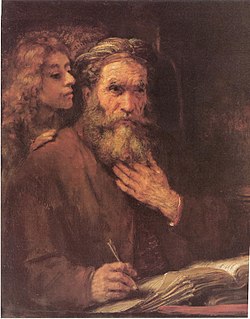 While it is true that the crucifixion of Christ is almost uncontested in historical scholarship (those who claim Jesus never even existed are rarely actual historians) what is contested by some is whether He actually died on the cross. It’s possible one of the earliest records of this is in the Koran, Surah 4: 156-157. This seems ludicrous when one considers that the entire point of crucifixion was to kill, and the Romans were very good at what they did, yet still this theory pops up from time to time. It is a way to explain the empty tomb and the post-mortem appearances naturally by claiming that He didn’t actually die on the cross. It’s usually called the “Swoon Theory” and it states that Jesus just ‘swooned’ or fainted on the cross and was taken down alive. There are two major holes in this theory that will be expounded upon in the following. NOTE: what follows contains some graphic descriptions of the crucifixion process. If this is not for you, skip to the final paragraph.
If you’ve seen The Passion of the Christ you already have a pretty good idea what scourging and crucifixion entails. If not, the following description will certainly help you to imagine what Jesus (and many others of His time) went through. The following description comes from Alexander Metherell, M.D., Ph.D (in Strobel, L (1998), The Case for Christ, Pp261-271). He says of the scourging before the crucifixion:
“Roman floggings were known to be terribly brutal...the soldier would use a whip of braided leather thongs with metal balls woven into them. When the whip would strike the flesh, these balls would cause deep bruises...which would break open with further blows. And the whip had pieces of sharp bone as well, which would cut the flesh severely.
“The back would be so shredded that part of the spine was sometimes exposed...it was just terrible... . A third-century historian by the name of Eusebius described a flogging by saying, ‘The sufferer’s veins were laid bare, and the very muscles, sinews, and bowels of the victim were open to exposure.’
“We know that many people would die from this kind of beating even before they could be crucified...because of the terrible effects of this beating, there’s no question that Jesus was already in serious to critical condition even before the nails were driven through his hands and feet.”
He continues with his description of the crucifixion proper:
“The Romans used spikes that were five to seven inches long and tapered to a sharp point. They were driven through the wrists [he indicates a point about an inch below the palm – the wrist was considered part of the hand in the language of the day].”
Considering the effect being hung like this would have on His body, Metherell states:
“...His arms would have been immediately stretched, probably about six inches in length, and both shoulders would have become dislocated...once a person is hanging in the vertical position...crucifixion is essentially an agonizingly slow death by asphyxiation. The reason is that the stresses on the muscles and diaphragm put the chest into the inhaled position; basically, in order to exhale, the individual must push up on his feet so the tension on the muscles would be eased for a moment. In doing so, the nail would tear through the foot, eventually locking against the tarsal bones. After managing to exhale, the person would then be able to relax down and take another breath in. Again, he’d have to push himself up to exhale, scraping his bloodied back against the coarse wood of the cross. This would go on and on until complete exhaustion would take over, and the person wouldn’t be able to push up and breathe anymore.”
When you add to this the fact that the Roman soldier thrust a spear up through His ribs and into His heart, in Dr Metherell’s words, “There was absolutely no doubt that Jesus was dead.”
So ends the graphic description. Is there anyone who, after hearing that, could still believe that Jesus came down from the cross alive? But, for the sake of argument, let’s say it was possible. It’s not, but let’s say it was. What kind of Messiah would He be? A truly pitiful sight, inches from death, needing to be nursed back to life over a period of weeks, probably months. This is the second hole in the Swoon Theory. If Jesus had survived the cross, and it’s a very big if, would He have really been able to inspire the disciples in the way that He did? Would they really have been so emboldened as to go to their death proclaiming Him as the Risen Lord? I don’t think so. Would He have been able to be walking down the road on shattered feet, talking to His disciples mere days after His crucifixion? Not a chance! And without the medical technologies of today, He surely would have died of His wounds. I really think this objection is based in nothing but a desire for the resurrection to be false, not for any valid medical or historical reason. Did Jesus die? For certain!
Sunday, May 24, 2009
Moving On
Two friends passed away this week. Frank Garrett, not quite forty, was in a motorcycle accident and Tom Morphis from severely aggressive cancer. I don't know the details from either situation, but both friends went way back. Frank for 15 years or so, and I knew Tom going on 35 years as he was a friend of my parent's.
Several years ago I spoke and served as a pall-bearer at another friend's funeral. I was just 23 or so at the time, and though class mates from school had passed away from one thing or another, drugs, reckless driving, or both, I broke down in front of the congregation (something my mother will never let me forget) as a "newer, more personal meaning of death" really hit me.
I lost my grandmother when I was seven, but remember not feeling quite so ... lost, about it. She was aged and had been in pain. My brother and I were told that she was "in a better place" and there was no suffering there. As time went on, I lost all my grandparents. When my grandfather went, being afraid of losing control again, I went all stony and didn't say a word for the better part of a week. Later, after having moved here to Tokyo, both my mother's parents passed and I couldn't make it to either funeral. Everyone waited for me to come home to have my grandmother's "ceremony" and I read something there that my father thought might be inappropriate, but I read anyway and everyone wanted a copy of later.
I briefly run through these varied, stoic, embarrassing and lost feelings, to help me in my own head and heart, really. Pretty sure I've run the gamut of emotion, but then again, so far, I've been spared most of the horrors many have seen, things perhaps I will never know. The loss of a spouse, a child, and tragically, in a disaster, some people have lost everyone. O what people mean to us, and then, when they are gone! Lost loved ones are as stolen anchors, our chains still hanging in the ocean, dangling, void, as we ourselves begin to drift silently. Tears are words that the mouth cannot form.
Jack Lewis said when H died that he wondered why no one ever told him grief felt so much like fear. It truly does, but its also different for everyone and in every situation. Friends tell us it's "time to move on," but we cannot. We have no where to go. We are stuck here. Stuck without them.
I think I have an idea why God does it, lets us experience this awful, numbing pain. What loss the Father must have felt as Christ was separated from the Eternal Union, all because Adam and Eve turned away (thus turning us all away) - Christ purposefully gave of Himself to recreate that bond. The breaking is the remaking, the crushing renewal. Life is suffering, but He would take as much of it upon Himself so that we know as little of it as possible.
In the suffering we go through for a loved one, we get to know a part of God that we could not know otherwise. Lewis finally realized, at the end of A Grief Observed, that it was not a question of, 'God, where have you gone [in my suffering], but that this is what You are really like!' But inside that grief lies a secure comfort that we cannot know apart from our Maker.
Now, having lost two friends inside a week, and myself stronger with hope in our Lord, I think I may have returned to my seven-year-old mindset. For now anyway. I know God will crush me with more loss later. And that's fine, but I do hope it's later. In the meantime, stuck here without them, but thankfully with each other, it dawns on me that it's not we, but those who have died that are moving on.
And a grand move it is. Godspeed, Frank. Godspeed Tom.
Several years ago I spoke and served as a pall-bearer at another friend's funeral. I was just 23 or so at the time, and though class mates from school had passed away from one thing or another, drugs, reckless driving, or both, I broke down in front of the congregation (something my mother will never let me forget) as a "newer, more personal meaning of death" really hit me.
I lost my grandmother when I was seven, but remember not feeling quite so ... lost, about it. She was aged and had been in pain. My brother and I were told that she was "in a better place" and there was no suffering there. As time went on, I lost all my grandparents. When my grandfather went, being afraid of losing control again, I went all stony and didn't say a word for the better part of a week. Later, after having moved here to Tokyo, both my mother's parents passed and I couldn't make it to either funeral. Everyone waited for me to come home to have my grandmother's "ceremony" and I read something there that my father thought might be inappropriate, but I read anyway and everyone wanted a copy of later.
I briefly run through these varied, stoic, embarrassing and lost feelings, to help me in my own head and heart, really. Pretty sure I've run the gamut of emotion, but then again, so far, I've been spared most of the horrors many have seen, things perhaps I will never know. The loss of a spouse, a child, and tragically, in a disaster, some people have lost everyone. O what people mean to us, and then, when they are gone! Lost loved ones are as stolen anchors, our chains still hanging in the ocean, dangling, void, as we ourselves begin to drift silently. Tears are words that the mouth cannot form.
Jack Lewis said when H died that he wondered why no one ever told him grief felt so much like fear. It truly does, but its also different for everyone and in every situation. Friends tell us it's "time to move on," but we cannot. We have no where to go. We are stuck here. Stuck without them.
I think I have an idea why God does it, lets us experience this awful, numbing pain. What loss the Father must have felt as Christ was separated from the Eternal Union, all because Adam and Eve turned away (thus turning us all away) - Christ purposefully gave of Himself to recreate that bond. The breaking is the remaking, the crushing renewal. Life is suffering, but He would take as much of it upon Himself so that we know as little of it as possible.
In the suffering we go through for a loved one, we get to know a part of God that we could not know otherwise. Lewis finally realized, at the end of A Grief Observed, that it was not a question of, 'God, where have you gone [in my suffering], but that this is what You are really like!' But inside that grief lies a secure comfort that we cannot know apart from our Maker.
Now, having lost two friends inside a week, and myself stronger with hope in our Lord, I think I may have returned to my seven-year-old mindset. For now anyway. I know God will crush me with more loss later. And that's fine, but I do hope it's later. In the meantime, stuck here without them, but thankfully with each other, it dawns on me that it's not we, but those who have died that are moving on.
And a grand move it is. Godspeed, Frank. Godspeed Tom.
How do we know? Part 1 - the Question
Why do all religions claim that they are the only way? How do we know which, if any, is right?
This is a very common question, one that is asked all the time. It’s also the one that gets a lot of Christians charged with bigotry and intolerance because we believe that Christ is the only way. But is it true that all religions claim to be the one true way? Not all, but certainly most. Why do they do it? I can’t speak for any other faith, but we Christians believe it because Christ said it. And why do we trust Christ? To borrow from Hollywood, “That, detective, is the right question.”*
But what is the answer? To answer this question, we must turn to history. You see, the Bible has stood the test of history, and it contains a huge number of verifiable (and verified, on many occasions) historical facts. The New Testament has never (to my knowledge) been proven wrong in any historical event it records. It is true that some of what it records has yet to be verified, but I believe it will, in time. Compare this to other holy books, like the Book of Mormon, that contain verified historical errors, and you find that what we have, in fact, are reliable primary source documents about, amongst other things, the life of Jesus. Four of them. They’re called by Christians “the Gospels”. Now, many tend to dismiss them or think of them as one document because they are bound together in one volume called the Bible, but that would be a mistake. Just because we collected the documents and published them together does nothing to undermine their historic reliability. Entire volumes have been written on whether what we have today is what was actually written, and a very strong case can be made in favour of their reliability, so I won’t attempt to do so here (the interested reader is referred The Evidence That Demands a Verdict, by Josh McDowell, for a very thorough examination or here for a thumbnail sketch).
What it boils down to are a series of historical facts that are, according to Dr William Lane Craig, almost universally accepted by Biblical scholars, religious and secular alike. These are: Christ’s crucifixion, His honourable burial by Joseph of Arimathea, the empty tomb three days later, and the post-mortem appearances to His disciples. Now, it should be noted, that although most scholars agree on these facts, they differ in their interpretation. For example, with regards to the empty tomb, some say the disciples stole the body, or they went to the wrong tomb, etc. These four events will take some time to thoroughly discuss, so what I intend to do over the next week or so is post on each of these in turn. I’ll leave it a couple of days between each for comments and for me to prepare the next post. But, in case you can’t wait that long, let me fill you in on how it ends – the hypothesis that Jesus was who He claimed to be (the Son of God) emerges as the most probable explanation for these events. And if He was who He claimed to be, then we have good reason to believe him when He said “I am the way, the truth and the life. No one comes to the Father except through me” (John 14:6).
P.S. For an extremely easy to read, cheap book on this topic ($6US), I recommend The Case For Christ by Lee Strobel. I will be drawing heavinly on this book for the subsequent posts.
Part 2: The Crucifixion
Part 3: The Empty Tomb
Part 4: Appearances and Transformations
* I, Robot, (2004)
This is a very common question, one that is asked all the time. It’s also the one that gets a lot of Christians charged with bigotry and intolerance because we believe that Christ is the only way. But is it true that all religions claim to be the one true way? Not all, but certainly most. Why do they do it? I can’t speak for any other faith, but we Christians believe it because Christ said it. And why do we trust Christ? To borrow from Hollywood, “That, detective, is the right question.”*
But what is the answer? To answer this question, we must turn to history. You see, the Bible has stood the test of history, and it contains a huge number of verifiable (and verified, on many occasions) historical facts. The New Testament has never (to my knowledge) been proven wrong in any historical event it records. It is true that some of what it records has yet to be verified, but I believe it will, in time. Compare this to other holy books, like the Book of Mormon, that contain verified historical errors, and you find that what we have, in fact, are reliable primary source documents about, amongst other things, the life of Jesus. Four of them. They’re called by Christians “the Gospels”. Now, many tend to dismiss them or think of them as one document because they are bound together in one volume called the Bible, but that would be a mistake. Just because we collected the documents and published them together does nothing to undermine their historic reliability. Entire volumes have been written on whether what we have today is what was actually written, and a very strong case can be made in favour of their reliability, so I won’t attempt to do so here (the interested reader is referred The Evidence That Demands a Verdict, by Josh McDowell, for a very thorough examination or here for a thumbnail sketch).
What it boils down to are a series of historical facts that are, according to Dr William Lane Craig, almost universally accepted by Biblical scholars, religious and secular alike. These are: Christ’s crucifixion, His honourable burial by Joseph of Arimathea, the empty tomb three days later, and the post-mortem appearances to His disciples. Now, it should be noted, that although most scholars agree on these facts, they differ in their interpretation. For example, with regards to the empty tomb, some say the disciples stole the body, or they went to the wrong tomb, etc. These four events will take some time to thoroughly discuss, so what I intend to do over the next week or so is post on each of these in turn. I’ll leave it a couple of days between each for comments and for me to prepare the next post. But, in case you can’t wait that long, let me fill you in on how it ends – the hypothesis that Jesus was who He claimed to be (the Son of God) emerges as the most probable explanation for these events. And if He was who He claimed to be, then we have good reason to believe him when He said “I am the way, the truth and the life. No one comes to the Father except through me” (John 14:6).
P.S. For an extremely easy to read, cheap book on this topic ($6US), I recommend The Case For Christ by Lee Strobel. I will be drawing heavinly on this book for the subsequent posts.
Part 2: The Crucifixion
Part 3: The Empty Tomb
Part 4: Appearances and Transformations
* I, Robot, (2004)
Friday, May 22, 2009
The Silent Killer
 Warning: The Surgeon General Has Determined That 'Self' Contains The Drug, Pride, Which Is Extremely Addicting And Is Known To Cause Death.
I recently prayed, "Make me humble, O Lord" but then, presumptuously, preposterously, added the clause, "but don't break me completely."
Bake me a cake but hold the flour, sugar, eggs and milk, will ya?
Rather like Augustine's famous prayer, "Lord, make me chaste, just not quite yet," I asked for the cake and wanted to eat it too. I am thankful He has a sense of humor and is a merciful and faithful God.
I think God purposed in my prayer, as it was, a revelation of self. Pride, you see, is the Silent Killer, and I think God has used this to show me, in gruesome detail, just how deeply my own pride runs. Once we are broken (and I am sure this is now a part of the breaking process) we no longer care where we were prideful. We no longer think of ourselves at all, becoming truly humble. But before that happens, I think God wants to show me my sin so that I may properly repent of it.
It was once said that conceit is the first sin to come and the last to go. It's the weed that seeds all the other sins in life. In asking God to show me my pride, He opened windows on Hell itself! Thankfully, believers are given assurance that we won't be setting foot there, lest I despair completely, for I see now that on every motive I hang a tag that says, PRIDE.
I speak to someone only to boost my standing in their eyes. I am a "pleaser of men," working, no matter how hard I try not to, more diligently in front of others. I even go out of my way to wear clothes that will make me appear more humble yet I can't comb my hair without wondering how Brad Pitt combs his. How we walk, what we eat, the projection of our voice, the words we choose, the intricate web of self that we throw up so we won't look so pale and thin.
Who is more proud than I? Perhaps none, but why do I even compare except to feed my own ego?
God did not purpose us to be pale and thin though. We are sons of Adam and daughters of Eve. That brings with it enough honor to raise the head of any beggar and enough shame to bow the shoulders of the greatest king. It is enough to be content(1). We are meant to shine with the Light of God, the light eternal and unwavering, brilliant, all consuming and yet, like the bush in the desert, non-destructive. Our own light however is pale and given to extinction, though it's hot enough to burn us to cinders and often does.
I figure that's why God must break us; the very material from which we make ourselves cannot withstand our own flame, much less the supernova of God. He must break us down in order to make us of firmer stuff.
Break me Lord, break me.
(1) Paraphrase from Lewis' Chronicles of Narnia.
Thursday, May 21, 2009
The Ascension!

On the cross
From the tomb
and to His Father.
The Father shares His glory with His Son,
The Son shares His glory with His Body
so do we return all glory and thanks,
praise and honor to the Father in Christ Jesus.
Ascension Thursday, 40 days after the Resurrection, marks the rise of Christ into the heavens to be at the right hand of His Father - something that had to happen in order for Christ to send us the Spirit on the day of Pentecost, 10 days from now. The reunion of the Son with the Father marks the completion of our salvation. The outpouring of the Spirit in days to come marks the birth of the Body of Christ on earth once again, sharing the Divine nature with Man, an event planned before the beginning of the world.
"So will My word be which goes forth from My mouth; It will not return to Me empty, Without accomplishing what I desire, And without succeeding in the matter for which I sent it." Isaiah 55:11Indeed.
![Reblog this post [with Zemanta]](https://lh3.googleusercontent.com/blogger_img_proxy/AEn0k_u5pmJQ120vb3E5iYrfTWRbJrYxYOV7ZioT7tv-n60yiUVfx0SWm55v6hW40wj-JGSjxZz3ex-HeaTd5rvZmDyTMX0Ttb9n02xrb2-hpIXzrjlRC7mZRWL6aoIeVmX_fz-lUQMN97gKKuWRvxylGumw=s0-d)
Wednesday, May 20, 2009
Celestial North Korea?
I was watching a panel discussion between William Lane Craig, Jim Dennison, Lee Strobel, another Christian guy I don’t know and Christopher Hitchens (you can see the whole thing here) and something that Hitchens said struck me. Not because it was especially profound (it wasn’t) or deep (it wasn’t) or even insightful (again, it wasn’t). What he said really summed up his entire presentation, and it seems from Bill Craig’s newsletter that he presented the same material in his debate at Biola a few weeks ago (I want to buy a copy of that, but Biola still doesn’t have any… :( ). Basically his whole point was that he didn’t want to be told what to do. That’s what it all boiled down to. He sounded a bit like a petulant child, actually… .
Anyway, what he said was this: when discussing God making a world with rules and punishing us for breaking those rules he likened such a world to a Celestial North Korea, with (presumably) God as Kim Jong-Il. Now the thing that really struck me about this statement was how shallow this idea is! Hitchens himself is a father, and I’m sure he set rules for his kids and punished them when they broke them. He probably knew they would fail to meet his expectations, and he set the penalties and meted them out accordingly. So my question to you is, Mr Hitchens, what makes God a tyrant when you do the same things? Things every parent must do? What the government must do? I don’t think he is an advocate of a society that has no laws or punishments for breaking them, but he objects to God making rules! “You can’t tell me what to do! You can’t set rules that I must obey and then punish me for breaking them!” The arrogance of this position is flabbergasting! But, then, what can you expect from a worldview such as his, a worldview where man is the top?
Anyway, what he said was this: when discussing God making a world with rules and punishing us for breaking those rules he likened such a world to a Celestial North Korea, with (presumably) God as Kim Jong-Il. Now the thing that really struck me about this statement was how shallow this idea is! Hitchens himself is a father, and I’m sure he set rules for his kids and punished them when they broke them. He probably knew they would fail to meet his expectations, and he set the penalties and meted them out accordingly. So my question to you is, Mr Hitchens, what makes God a tyrant when you do the same things? Things every parent must do? What the government must do? I don’t think he is an advocate of a society that has no laws or punishments for breaking them, but he objects to God making rules! “You can’t tell me what to do! You can’t set rules that I must obey and then punish me for breaking them!” The arrogance of this position is flabbergasting! But, then, what can you expect from a worldview such as his, a worldview where man is the top?
Monday, May 18, 2009
Kingdom Grace
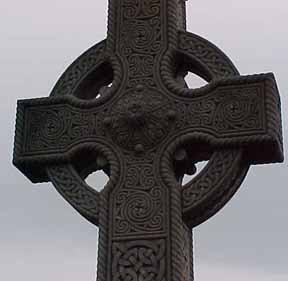 Kingdom Grace has posted a few thoughts on "Not Starting a Church" originally from Wayne. The talkbacks are fascinating. Very insightful thoughts indeed. For instance, on the vacuum created by requiring care to occur in the context of relationship,
Kingdom Grace is a blog, so I recommend some time surfing the pages and articles to get a good grasp of the angle she is coming from without just taking things out of context. Great spot to visit for inspired thought.For if there is no ‘group’ who cares about the person sitting beside me then there is more need for me to care about that person. If there is no pastoral support team in place then I need to be the pastoral support. The refusal to offer pastoral support thus generates a potential place where pastoral care is distributed among everyone.
It is a common feature of religious life that we often seek a leader to tell us what to do. In these situations I would argue that it is good to have a leader who refuses to take on that role. Who, by doing so, forces the other to take responsibility for themselves.
The truth is that many of us seek a particular kind of leader, namely one we can lead. What this means is that we want someone to tell us what we want to hear, but that we want them to take on the responsibility for our actions rather than embrace that responsibility ourselves. The leader who refuses to lead short-circuits this manipulative game and invites people into taking on the responsibility for their own decisions.
Sunday, May 17, 2009
How to Fight
 [Jakarta] has asked how to use Scripture to fight temptation. This is going to be a bit long (is it ever short?) but I think this one needs to be. If you want the short version, then I say, trust in Christ and pray His Word, walk away and let the situation pass. If that doesn't help (which it should) then, read on.
Temptation comes to all of us, no one gets a free pass. But we have a King that faced it just the same as we and defeated it. Christ Jesus was tempted in every way but did not sin and He has given us more than just a few things in this. One, hope. Two, strength in the middle of it. Three, weapons with which to fight. Four, a companion to walk with through the dark valley, and lastly, Five, a way out.
Proverbs says the way a young man may guard his paths against evil shall be to know the Word of God. John says that Jesus is the Word. Knowing Jesus is the only way to defeat temptation - because He already has! So we have hope. He experienced the same things you and I do everyday, even to the point of death, but in not sinning, in submitting totally to His Father, God, Christ received His Father's glory and then He gave it to us. To us! We have hope indeed!
Christ also bestowed on us strength. Let me use an analogy. I'm a fairly strong guy (smelling, you say? funny you). But you don't know how strong I am until you pit yourself against me. You don't know how strong you are either. Until we arm-wrestle and give it a serious go, you have no idea how strong I am. And you certainly don't know how strong I am if you just give in each time because you assume I am stronger. Its all theory until it goes into practice. So in arm-wrestling temptation, and being the only one never to give in, Jesus is really the only person to ever know how strong temptation really is. He knows better than anyone else what you are going through, precisely because He never sinned.
So it's true, in knowing God, and relying on His knowledge and strength, Christians know more about Good and Evil than those who have never tried to put up a fight, nor care anything about God. People prone to evil acts, or giving into temptation, have no real idea of what evil is, because they have never fought against it. On the other hand, resistance builds muscles, even spiritual ones. Resistance also brings knowledge. Perhaps this is good reason God told Adam and Eve not to eat of the fruit of the Tree of Knowledge, because God knew full well that relying on His knowledge is far greater wisdom than that of Man's. As Jack Lewis once pointed out, a thoroughly bad man thinks he is okay, a moderately good man knows how bad he really is. And it is in knowing how bad you are that you appreciate how much God has done for you in His Son. Strength through Grace. Amen.
Third, how was it that Christ defeated the devil? Perhaps a more pressing question might be, how did the devil tempt even Christ, Himself? By quoting the Word. Satan always tempts us with just enough truth to water down the bile he attempts to feed us so we won't spit it up. He quoted Scripture to Jesus then he arrogantly questions what God said, playing on our own sense of knowledge, wisdom, and strength, wholly apart from God's. He catches us when we think ours is sufficient. Satan says to Christ, 'If you are God's Son, do this, for it is written...' 'Did God really say...?' Now, how do you know what Scripture Satan is quoting or what from what context it was given if you don't know the Word, yourself? Christ answers Satan every time by quoting more of God's Word back to Him because He knows the Word well enough to respond accordingly. So must we. You need to know God's Word, memorize it, keep it in your heart ready to pull out at a moment's notice.
God's Word out of context is a weapon against us, but in context, with a Spiritual understanding, God's Word is a weapon against temptation. We must rely on the One who embodies and fulfills the Word, the One who knows the Word fully, Christ. And He knows the Word, because He IS the Word. God's Word is our weapon. Jesus is the Sword and the Sword Wielder.
We are given a companion to walk with as well, for the same reason that He is our Strength, the Weapon and the Wielder. He experienced it, fought it, defeated it. He knows well the paths you must travel and is there to help you along the way.
And for the very reason that He made it through this world by the Strength of God, has shared that Glory and Strength with us now, and walks with us and loves us with (truly) an undying Love, He is our way out. He really is all we need. So get to know Him well and let Him know you fully too, trusting Him with all your troubles.
If you need Scriptures to help with certain temptations, get your Bible, perhaps a good concordance, and memorize those helpful to you. I will give a short list, but as Satan attacks each of us differently, we must really be prepared to fight him according to how we are usually tempted. For instance, if it is sexually, you may want to remember
1 Corinthians 6:18-20, "Flee sexual immorality! 'Every sin that a man does is outside the body,' but he who commits sexual immorality sins against his own body. Or don't you know that your body is a temple of the Holy Spirit which is in you, which you have from God? You are not your own, for you were bought with a price. Therefore glorify God in your body and in your spirit, which are God's."Remember this and recite it over and over each time you are brought to temptation, then flee, as it says. If you are tempted by the magazine racks, avoid them. If you are tempted by someone in your office, pray and physically turn away (or purposely act like a moron - he/she will think you're an idiot, but your spouse will think you're a hero!)
Perhaps you are tempted by material items?
Psalms 119:72, "The law of Your mouth is better to me Than thousands of gold and silver pieces."Recite that, pray fervently and then walk right out of the situation. Trust in God to handle your temptation for you and He will. It will pass, I promise and the dawn will break. The Son will Rise again.
Subscribe to:
Posts (Atom)